Tuesday, 1 March 2022

A reminder based on the book 'Ramadan: A dua a day'


 Assalamu alaikum wa rahmatullah dear readers,


I hope you are in best of Imaan and health. Jazakallah khairan for visiting my humble blog. Last year I was blessed to read and cover an excellent book written by N.S. Ahmad 'Ramadan: A dua a day' during the month of Ramadan alhamdulillah. As we are approaching the sacred month soon in sha Allah bi idnillahi ta'ala, I believe this post with the recording above can help us to start getting ready for Ramadan 2022/1443 in sha Allah. Last year, I have lost several loved ones and have witnessed two dead bodies the same day their precious souls departed to their Rabb . I don't want to forget what I have witnessed as I will be leaving this dunya too one day and I must prepare for that ultimate journey. 

I have shared some of the beautiful supplications from the book. Please do try to get hold of the book for Ramadan in sha Allah. One of my beloved teachers reminds us that we should not start our good deeds in Ramadan, we should start before the month and increase the deeds in Ramadan in sha Allah.

O Allah! I place my need before You, although my understanding is limited and my actions are weak. I am in need of Your mercy, so I ask You, O You Who decides all matters and heals the hearts, as You separate the seas from mixing, in the same way, protect me from the fire of Hell and from the cry for destruction (in order to get rid of the punishment) and from the trial of the graves.

O Allah! Whatever my mind has not been able to conceive and my intention and desire has not reached, of good that You have promised to anyone from Your creation, or any good You are going to give to any of Your slaves, then indeed, I seek it from You and I ask You for it, by Your mercy, O Lord of the Worlds.

O Allah! The Owner of the strong covenant and the Director to the right path, I ask You for security on the Day of Torment; and Paradise on the Day of Eternity along with (Your) close witnesses, those who bow down and prostrate , those who fulfil the covenants. Verily You are Most Merciful and Most Loving. And indeed, You do what You wish.

O Allah! Let us be of those who guide others to the right path and are themselves guided aright; who are neither misguided nor misguide others; who are at peace with Your friends, and at war with Your enemies. We love due to Your love, those who love You, and abhor , due to Your enmity those who oppose You.

O Allah! This is the supplication (from us) and from You is the response, and this the effort ( from us), and upon You is the reliance. [Jami' at-Tirmidhi]


Sunday, 28 February 2021

Tajweed notes on Sifaat

 Assalamu alaikum wa rahmatullah, 

Welcome to another post on the rules of Tajweed.

My beautiful teacher has provided us with videos on Sifaat which I have been eagerly waiting for alhamdulillah. The videos are very good and self explanatory mashAllah tabarakallah. 

I hope you will be able to benefit from the playlist too in sha Allah. Happy learning!

Module 5 : Sifaat  


You can find all the related videos here in sha Allah. Spread the link in sha Allah.

Saturday, 23 January 2021

Preparing for Ramadan 2021

In the name of Allah, the Most Merciful, the Most Generous 

In sha Allah (God willing) in three months time, we will be witnessing the blessed month of Ramadan 1442/2021. It will be around middle of April, depending on the Moon sighting as our Hijri calender is based on Moon. Ya Rabbi, enable us to prepare and witness the sacred month. 

There is a saying that when we fail to plan, we plan to fail. So the question we all must ask ourselves is am I preparing myself for the great month? Are we ready to welcome Ramadan 1442/2021 


Our spiritual ancestors, specially the great companions (of our beloved Rasulullah sallallahu alaihe wa sallam) used to start their preparation six months ahead of the month. They truly understood the significance of this great month. When we embark on a journey, we prepare the provision for the journey. So what can we do to prepare for Ramadan? I have put together a list of activities I am trying to follow on a regular basis in sha Allah. My list is based on lessons with my respected teachers as well as books I have been reading to prepare for Ramadan.

So here are some activities to get us into Ramadan mode in sha Allah bi idnillahi ta'ala: 

1. Sincerity (Ikhlaas) is the key: Every action is judged by its intention. Allah subhanahu wa ta’ala always looks at the state of our heart. He only accepts the deeds which are solely done for His sake, not for any other ulterior motive. So the first priority should be to purify our intention and do the activities only for His pleasure in sha Allah. He is the controler and changer of our hearts so let us supplicate to Him on a regular basis to change our hearts for His sake and purify our intentions. This is an ongoing process so we need to keep renewing our intentions in sha Allah till we meet Him. 

2. Fasting on a regular basis: Our beloved Rasulullah sallallahu alaihe wa sallam used to fast on Mondays and Thursdays. Fasting twice a week is quite doable. We can fast Mondays and Thursdays to get into fasting mode in sha Allah. If it is difficult then we can fast three days a month like our beloved, Rasulullah salllallahu alaihe wa sallam, who used to fast the middle of the months (Hijri calendar). Abu Dharr radiAllahu anha reported: The Messenger of Allah sallallahu alaihe wa sallam said, “If you want to observe Saum on three days in a month, then fast on the thirteenth, fourteenth and fifteenth of the (lunar) month.” [At-Tirmidhi] Fasting three days out of 30/31 days is very doable. Moreover, the reward for the three fasts is really great alhamdulillah. ‘Abdullah bin ‘Amr bin Al-’As radiAllahu anha reported: The Messenger of Allah subhanahu wa ta’aa, “Observing Saum on three days of every month is equivalent to a full month’s fasting.” [Al-Bukhari and Muslim] How generous is our Rabb! So let’s get into fasting mode in sha Allah! 

3. Connecting to the Qur’an (Allah swt's Words): Ramadan is regarded as the month of the Qur’an as the sacred Book was revealed to our beloved Rasulullah salllallahu alaihe wa sallam during the night of power (Lailatul Qadr). The goal of Ramadan is to connect to our Lord through His worship. By reading, reciting, studying, memorizing, reflecting on His Book on a regular basis, we can become more conscious of Allah subhanahau wa ta’ala. Our Ramadan 2021 can feel truly meaningful if we prepare for the month through daily connection to the Qur’an from now on. Let us work for that lofty goal in sha Allah. I am studying the Juz amma (30th part of the Qur’an) and suarh Al-Baqara with my amazing teacher mashAllah. Try to find a good teacher and sit with the teacher on a regular basis in sha Allah. We can also listen to tafseer by Sheikh Akram Nadhwi, Sheikh Yasir Qadhi, Mufti Menk, Ustadh Nouman Ali Khan, Sheikh Omar Suleiman, Imam Suhaib Webb and the list goes on alhamdulillah.
If you cannot find a teacher, try to team up with like-minded friends and sit together to listen to lectures by reliable scholars. Even if we can learn a single verse a day, by the time Ramadan approaches, we can increase our connection to the Qur’an in sha Allah. 
One of my beautiful teachers always remind us that Ramadan is not the month to start our worship of Allah subhanahu wa ta’ala but the month to increase the various forms of worship and perform these worships with presence of heart (mindfulness). 

4. Studying the seerah: Studying the seerah (the biography of our Messenger sallallahu alaihe wa sallam) is also a great way to inspire us to get ready for Ramadan. The more seerah we can delve into, the better in sha Allah. The more we know about our beloved, the more we will be passionate to love him and follow him to please our Rabb. My personal favourite is Martin Lings’s Muhammad. It is quite a short, concise seerah and beautifully written mashAllah. We are reading the book as a family. Children are always excited to know what happens next. This year I am also hoping to complete reading the “Sealed nectar” (Ar-Raheeq Al-Makhtum) by Safi-ur-Rahman al-Mubarakpuri. I am blessed to be part of a seerah bookclub where we are reading the Sealed nectar quite thoroughly alhamdulillah.  Another beautiful seerah book worth reading is Muhammad: As if you can see him by ‘A’id al-Qarni. To prepare specially for the month of Ramadan, a beautiful book to read is The prophet’s Ramadahaan by Mufti Muhammad Khan Qaadri. 

These are just some suggestions I have come up with. Anything you can benefit from is from Allah subhanahu wa ta’ala and anything which is not of benefit is solely due to my own shortcomings. I hope and make dua that by His grace, we can truly understand the significance of this great month like our beloved Rasulullah (saw) and the blessed predecessors and He subhanahu wa ta’ala enable us to prepare for Ramadan and do our best to connect to Him, ameen! I hope to hear from you about how you are preparing for this great month in sha Allah. Please do share your thoughts on this topic. Jazakallah khairan katheeran for reading.

Friday, 22 January 2021

A precious bond

I am surrounded by special sisters. They are always there for me. During my hardship, they help me with their kind words and beautiful dua. I know I can rely on them. I know that they keep me in their precious dua. They are my soul sisters. And the special love they have for me is priceless. I can't buy this love. A love so pure and precious subhanallah! The source of this love is my Rabb. It is Allah subhanahu wa ta'ala who enables us to love each other so sincerely for His sake !
I can't thank my Rabb enough for surrounding me with such kind and gentle souls alhamdulillah. Without my beautiful soul sisters, my life would be so difficult to live. My soul sisters teach me to always be loving and caring to others. They encourage me to be positive and resilient, no matter how difficult the life may seem . They have taught me not to underestimate the power of any good deeds, it can be a kind word, a sincere dua, sending a bouquet of beautiful flowers or homemade cakes and the list goes on. Let's be the soul sister for each other in sha Allah! Let's create a strong and never ending bond of sisterhood in sha Allah! Let's hold each other's hand and enter jannatul ferdous together in sha Allah bi idnilllahi ta'ala!

Monday, 4 January 2021

Some lessons from 2020


I can't believe 2021 is already here! It feels so surreal given 2020 has been such a challenging year for me. At the end of April, just when we were preparing to welcome the blessed month of Ramadan 1441, my beloved dad had tested positive for Covid-19. He was working as a consultant up north near Shrewsbury. He was almost 70. He had to be hospitalised as he was struggling to breathe. He was on the ventilator for more than two months. Several times, hospital staffs called us to inform us of his critical state and to be prepared for the worse. Multiple organ failures, long days and nights of just waiting , fear of the unknown...2020 was definitely a roller coaster of so many mixed emotions for me and my loved ones. But my faith helped me so much during that difficult phase of my life. I don't know how I would have survived without the immense Mercy and Love of my Rabb, my Creator, Allah Subhanahu wa ta'ala. I would like to share the lessons I have learnt through my ordeal of 2020 and how I would like to spend year 2021 based on these precious lessons (blessons = blessings+lessons) I have learnt in sha Allah.

Lesson 1 : All I need is the company of Allah (Subhanahu Wa Ta'ala) 


Nothing can help us or calm us when we are going through a hardtime. Only running back to our Rabb can give us solace. Allah subhanahu wa ta'ala have enabled me to connect to His Magestic Words, the Qur'an during that difficult time. I felt so connected to His Words that I thought I am the subject of the Qur'an. It is talking to me ! My Rabb is doing my much-needed therapy at every stage of my life alhamdulillah. Nothing can replace that peace of mind I had alhamdulillah! Telling me to hang in there. And that's how we should approach the Qur'an, I beleive. It is a message of guidance to every single one of us. It is a much-needed letter to me with so much love and concern for me! Is there any doubt in this Book ? As a believer, we don't have any doubt in the Qur'an. We know that it is indeed the blessed Words of our Lord. He Himself tells us at the begining of the Qur'an that there is no uncertainty in His Book. So why as believers, we don't connect to the Qur'an on a daily basis? Why do I rush back to reciting it, only when I am facing any trouble? Why don't I always have a strong connection to the Words of my Loving Rabb? I felt so ashamed and thought I must change my attitude towards the Qur'an. I hope to build a good and strong relation with the Qur'an bi idnillahi ta'ala. I want the Qur'an to be my daily companion, my best friend . I want to spend more quality time with the Qur'an by reading, reflecting, reciting and most importantly implementing the lessons in my daily life in sha Allah bi'idnillahi ta'ala. May Allah subhanahu wa ta'ala enable us to be among the people of the Qur'an, ameen! May my precious Rabb make the Qur'an the spring of my heart ❤️! 

Lesson 2 : Be grateful and maintain an attitude of gratitude


No matter what we go through, there is always plenty to be grateful for, alhamdulillah. Gratitude is a very important virtue to have and maintain on a daily basis. It helps me to appreciate every single blessing Allah subhanahu wa ta'ala has gifted me. We don't deserve anything. That's why I said gift. Everything is a gift from my Rabb. When we appreciate the countless gifts He has given us, life becomes so beautiful and meaningful for us.When we are gratfeful to Him, He even gives us more ! How Merciful and Giving is my Rabb Subhanallah! During the stressful and painful phase, my loved ones have supported me so much with their constant support and immense kindness alhamdulillah. May Allah subhanahu wa ta'ala reward them with the best , ameen! I felt like our beloved Prophet Ibrahim AS who was thrown into the fire but he felt peaceful and calm in the midst of the fire! I can't thank Him enough for all the blessings He has surrounded me with during my hardship! I hope to be grateful at every moment of my life in sha Allah. May Allah subhanahu wa ta'ala enable us to be among His grateful slaves, ameen !

Lesson 3 : Be kind, gentle and helpful to everyone


Never underestimate the value of kindness.What people tend to remember is how we treat them. Am I kind and gentle to people around me? A simple act of kindness can change someone's whole day. Kindness generates more kindness. What sort of legacy would I like to leave behind? Will my loved ones remember me as a gentle and helpful person ? One of my greatest weaknesses is I can become very harsh. I feel so blessed to be surrounded by very kindhearted and gentle souls alhamdulillah. The more I receive their precious kindness the more I feel inspired to reciprocate it in sha Allah. I also hope to be in service of others in sha Allah. Our beloved Rasulullah Sallallahu Alaihe wa sallam was always in service of people (khidma). He is sent as a Mercy to the humanity. May Allah subhanahu wa ta'ala enable us to be among the kind, gentle and very helpful people, ameen!

Lesson 4 : Be always positive and generate positivity 


Among all the negativity, given the current Covid situation, I must be positive. If I have Allah Subhanahu wa ta'ala with me, I can't let any negative thought affect me. I need to help others to feel positive too. By being there for others, we can help each other during this difficult time. The more positive we are , the better in sha Allah! Our faith teaches us to inculcate a positive mindset. The Qur'an tells us numerous stories of the prophets to inspire us to be positive and remind each other the power of positivity. Feeling hopeless is acually a sin. Our beloved prophet Muhammad sallallahu alaihe wa sallam's Seerah (Lifestory/biography) teaches us to be always positive and hope for a happy future. He is send as a Mercy to us. When we deeply study his amazing life, we find somany lessons of hope and positivity . One of the greatest blessings in 2020 for me was to join a Seerah bookclub where I met some very passionate sisters who have helped me so much to connect to Seerah in a meaningful way alhamdulillah. The more deeply we can study the seerah, the more positive we can become in sha Allah. 

Lesson 5 : Hold on to precious teachers


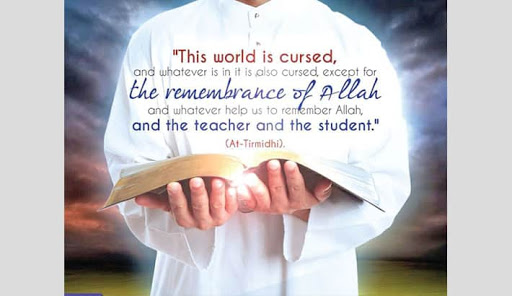
My teachers are very precious to me. I can't thank my Rabb enough for enabling me to be a student/seeker of knowledge alhamdulillah. Everything on this earth is cursed apart from the beautiful teachers who remind us of the ultimate truth (Al-Haqq) , the students of knowledge and the circles of knowledge. Our faith is based on knowledge. The true people of knowledge are the most Godconscious people on this earth and they are the most righteous among the humanity. They are also the most helpful and generous to the creations of Allah subhanahu wa ta'ala due to their intense love for Him. When someone falls in love with his/her Creator, he/she loves His creations too. My Rabb has enabled me to spend time in their precious company alhamdulillah. They always remind me of my Lord and His beautiful attributes. They help me to connect to His Book, the Qur'an and His beloved Messenger, Rasulullah sallallahu alaihe wa sallam. My ultimate teacher is my Rabb, Allah subhanahu wa ta'ala and He is the One Who facilitates for me to learn and strive for His sake alhamdulillah. So all praise belongs to Him, subhanahu wa ta'ala. May Allah reward my precious teachers, accept their efforts, preserve them and reward them with the best , ameen ! May Allah subhanahu wa ta'ala enable us to be among the people of learning and the people of striving, ameen! May we honour our teachers and learn from them, ameen!

May Allah subhanahu wa ta'ala enable me to remember these 5 lessons and enable me to act accordingly, Ameen! May this year be a year of endless blessings for all of us, ameen! 


Saturday, 18 April 2020

Seerah notes from Adil Salahi's Book


Bismillah In the Name of Allah, the Most Merciful, the Most Loving

For the Seerah book club (March 2020), I have chosen Brother Adil Salahi’s Muhammad: Man and Prophet. I hope to jot down some important points as I read through the book insha Allah. I would strongly suggest to buy this excellent seerah book. If you are interested in Sociology and History, this book will be a joy to read and reflect on in sha Allah. 
Amazon UK


The intention behind reading the book:
Allah subhanahu wa ta’ala has sent our beloved Prophet Muhammad sallallahu alaihe wa sallam as a great example to follow if we truly aim to please Allah swt.
When we study his character and his life in details, the Prophet Muhammad saw appears to us as noble, dedicated, human leader who takes good care of his followers. But he is, above all, a model believer to whom we should always turn in order to determine what course to follow and what action to take. He is the walking talking Qur’an as our beloved mother of the believers, lady Ayesha RadiaAllahu Anha mentions. Through living his life according to the Qur’an, he has successfully shown us how we should live on this earth. Only by following his blessed footstep, we can truly achieve success in sha Allah.
I have bought the book from Amazon, link is here where you can also read some sample pages in sha Allah. I have also shared a video where the writer discusses some topics regarding seerah. Allah subhanahu wa ta'ala knows best.
Our goal when we read the seerah of our beloved Rasulullah saw is to learn how to be a firm beleiver in sha Allah. 

We should always remember his last reminder to us:
I have left with you what should provide you with sound guidance and immunity from error if you would only adhere to them: Allah’s Book and my example.

A glance back in history
Prophet Ibrahim Alaihes salam was blessed with Ismael through lady Hagar. She was given as a gift to Lady Sarah, prophet Ibrahim’s first wife. As she was childless for a long time, she presented lady Hagar to her husband (AS) saying: “I am now an old woman, well beyond the age of childbearing. I am giving you my bondwoman, Hagar, and hope that Allah may give you a child through her.”

Allah swt ordered Ibrahim AS to leave Hagar and baby Ismael in a barren valley in Makkah.  When Lady Hagar was told to stay there with her baby, she asked Ibrahim AS the reason behind this action. When he said that it was a divine order, she said bravely, "He who has ordered you to do that will not abandon us.” This shows her strong faith in Allah subhanahu wa ta'ala. 

After leaving his precious family in a barren land, he AS made a heartfelt prayer: 
“Our Lord, I have settled some of my offspring in a valley where there is no vegetation, close to Your sanctified House, so that, our Lord, they might devote themselves to prayer. Cause You, therefore, people’s hearts to incline towards them and provide them with all sorts of fruit, so that they may have cause to be grateful.” (14:37) With the feeling that Allah swt would not abandon his precious family, Ibrahim AS continued his journey home with a new sense of relief.

Lady Hagar devoted herself to her young child, reassured that Allah swt have a purpose for their arrival in that lifeless desert. But as the days passed her food supply was dwindling and she desperately tried to find water running between the two hills, Safa and Marwa. While on her 7th attempt she heard a voice. Then she saw water gushing forth near her baby Ismail’s feet. With Allah swt’s blessings, she and her baby was gifted with water of Zamzam. The water attracted the birds and that’s how an Arabian tribe, Jurhum, came to meet lady Hajar and Ismail. They settled their with lady Hagar’s permission. Ismail AS grew up with them, learning their language and culture. When he was a young man, he married a Jurhum girl who gave him a number of sons and daughters.

Ismael was in effect one of the Jurhum. He and his children lived in that valley and many generations later our beloved, Muhammad saw, Allah swt’s Messenger and a direct descendant of Ishmael, was born in that very place.

Prophet's dreams are true. Prophet Ibrahim AS saw a dream that he was commanded to sacrifice his son, Ismael, for Allah’s sake. He told his son who was in his teens. Since he was brought up by a mother with firm faith and a father who was a Prophet, faith had been instilled in him ever since he was very young. He said, “Father, do as you are bid. You will find me , God willing, patient and able to face death with fortitude.”(37:102)

Both father and son went out of the city to Mina. Shaitan tried to stop Ibrahim AS from sacrificing his son. Ibrahim AS’s submission to Allah swt’s will, however, showed no sign of weakness whatsoever. He then stoned Satan in three different spots. His action is commemorated by pilgrims when they stone the Jamarah during their pilgrimage. At the moment when Ibrahim AS was about to cut his son’s throat in complete submission to the Divine will, he was told by an angel that Allah swt had accepted his offering and he was told to sacrifice a fully grown sheep instead of Ismail AS.

On another visit, Ibrahim AS was ordered to bulid the House of Allah swt, the Kaba with his son, Ismail AS.  When Ibrahim AS and Ismail AS were raising the foundation of the House, they prayed: “Our Lord, accept You this from us, for You are indeed the One Who hears all and knows all. Our Lord, make us submit ourselves to You and make out of our offspring a community which will submit itself to You and show us our ways of worship and accept our repentance . You are indeed the One Who accepts repentance, the Merciful. Our Lord, raise up in the midst of our offspring a messenger from themselves, who shall convey to them Your revelations and instruct them in the Book and in the wisdom and cause them to grow in purity. You alone are the Almighty, the truly Wise.” (2:127-129)

Our beloved prophet Muahammad saw is the answer to this noble dua. Allah swt taught Ibrahim AS all the rituals of hajj and people started coming to Ka’ba to perform their hajj. The city of Makkah became a sacred city ( Al Haram) where fighting was not allowed. It was also forbidden to hunt and cut the trees.

Naturally, the custody of the Ka’bah belonged to at first to Ismael and his children. It continued in their hand until it was later taken over by the Jurhum tribe. After a long time, due to their gradual corruption, the Khuza’ah tribe took hold of the custody. When Jurhum tribe realized that they were unable to defend their position, they collected all the treasures which were dedicated to the Ka’bah and buried them in the well of Zamzam. They levelled the well and removed all traces of its position. Then they left Makkah. For a long time, the custody belonged to Khuza’ah. After them, it was the Quraish who took over. They enjoyed the noblest lineage in Arabia because they were the direct descendants of Ismael and Ibrahim (peace be upon them both). The man who gained that honour for the Quraish was Qusayy ibn Kilab , the fifth grandfather of our prophet saw.

He was a true leader. He married Hubba, daughter of Hulayl ibn Hubshiyyah, chief of the Khuza’ah and Master of Makkah who held the position of the custodian of the Ka’bah. He chose him as the leader as he recognized his qualities as a leader. When he became the undisputed lead of Makkah, he called all the Quraish tribe to live near the Ka’bah. All the Quraysh were extremely happy with Qusayy’s leadership. They called him the Assembler because he had caused the Quraysh to regroup. He built a big hall close to the mosque to serve as a meeting place for the Quraysh and called it Dar al-Nadwah.

He also initiated the practice which is called Rifadah which facilitated hosting and feeding the pilgrims in Makkah.  Qusayy himself took part in the work and offered the pilgrims whatever the Quraysh prepared for them-bread, meat and various dishes. This increased the Quraysh’s prestige and enhanced Qusayy’s honour. He in effect combined all the symbols of honour and leadership.

Hashim, Qusayy’s grandson, put hostility to pilgrims on an unprecedented level. He was very wealthy and generous. He started the biannual commercial trips which soon became a well-established tradition in the life of the Makkans. In the summer a large commercial went to Syria and a similar one went to Yemen in winter. It was mentioned in Surah Al-Quraysh.

‘Abd al-Muttalib became the chief of Quraysh after the leadership enjoyed by his uncle. He continued the rich tradition of the tribe. He was given the honour of finding the Zamzam water after it was hidden out of vengeance by the tribe of Jurhum before they left Makkah. While facing difficulty digging the zamzam, he made a dua to Allah swt to grant him ten sons to strengthen his leadership and in return he would sacrifice one son to show his gratitude to Him swt.

When he was eventually granted sons ( He had five wives) he drew lots to find who to sacrifice. His youngest son Abdullah’s name came out. Despite the intense opposition, he still wanted to sacrifice Abdullah, his favourite son. But the tribal leaders advised him to resolve the matter through consulting a female fortune-teller of Yathrib who was known to have contacts with the jinn.

She said, “Go back to your town and arrange a draw to be made between your man (‘Abdullah) and ten camels. If the draw comes out against the man, add ten more camels. Continue to do so as long as the draw comes out against him. When the draw shows that the camels are accepted, this means that your God has accepted the offering and spared your man. You slaughter those camels as a ransom for him.” He followed the instruction and he sacrificed 100 camels as a ransom for his beloved son ‘Abdullah. He was very pleased when his son’s life was spared and wanted ‘Abdullah to get settled. He arranged his marriage to lady Aminah, daughter of Wahb ibn ‘Abd Manaf, chief of the clan of Zuhrah. It was a happy marriage.

Abdul Muttalib told ‘Abdullah to join the trade caravan travelling to Syria that summer. Aminah was sad to be separated from her beloved husband but she was aware that Abdul Muttalib did whatever is best for his son as he was being trained to be trader. Before leaving, ‘Abdullah was given the happy news of her pregnancy.

The journey was very difficult for ‘Abdullah. He contracted some sort of disease which sapped his strength, yet he had no choice but to travel with the caravan. As his health got worse, he had to be left behind in Yathrib (later to be known as Madinah) and was looked after by his cousins of the clan of Al-Najjar. Abdul Muttalib was worried when the caravan arrived without ‘Abdullah. He sent his eldest son, al-Harith to help his brother on journey home. By the time Al-Harith reached to Yathrib, he was given the sad new of ‘Abdullah death.

A campaign to destroy Kabah
A major event took place during the year of our beloved prophet’s birth. Abraha, the Abyssinian governor of Yemen, built a luxurious church hoping Arabs will start coming to the church instead of visiting Ka’bah. But to his great disappointment, tribes around Makkah were still was attached to Ka’bah. They believed themselves to be the descendants of Ibrahim and Ismael who built the House. Some even ridiculed Abraha’s effort. One of them went so far as to use the most splendid spot in that church for defecation! When Abraha was told about the incident, he decided to pull down the Ka’bah in order to achieve his objective of turning the Arabs away from it. He therefore marched at the head of a great army with elephants. Some Arab tribes tried to stop him and they failed.
On arrival at al-Mughammas (a valley midway between Ta’if and Makkah) Abrahah dispatched one of his commanders to Makkah where he looted some possessions from the Quraysh and other Arabs, including 200 camels which belonged to Abd al-Muttalib. 

The story continues in sha Allah...but not with so much details as I believe getting your own personal copy is very important. I highlight and annotate a lot. In sha Allah I hope and pray that we can learn a lot and follow our beloved as much as possible in every aspect of our life. Just like as believers, our motto is No Salah (prayer) , No Falah (succcess) Our motto for reading and getting to know of beloved is No Sunnah, No Succcess. May Allah subhanahu wa ta'ala enable us to truly connect to His beloved and learn from his blessed life, ameen! May Allah subhanahu wa ta'ala purify our intention and allow us to meet him oneday, ameen!


Saturday, 19 May 2018

Tajweed notes on makharij


Bismillah With the Name of Allah , the Most Merciful

I have typed some of my tajweed notes on makharij for the purpose of revision inshAllah.  Alhamdulillah our beautiful teacher has started doing videos on tajweed. I have shared some of the videos here with relevant notes. Hope this helps us all inshaAllah.
Image source 
Makharij means articulation point i.e the place where the letters exit from. Letters are called huruf in arabic. Harf is the singular form of the word huruf.
There are five different exit points (makharij). 
1.      Al-Jawf ( The empty space in the throat and mouth/ the oral cavity)
2.      Ash-Shafatayn  ( The lips)
3.      Al-Halq (The throat)
4.      Al-Khayshum (The nasal passage)
5.      Al-Lisaan ( The tongue)


Al-Jawf ( The oral cavity) 
From the jawf ( empty space in the mouth and throat) three letters emerge. These madd ( lengthening the sound) letters are:
Alif ( ا ) preceded by a fatha
Yaa ( ي ) preceded by a kasra
Waaw ( و ) preceded by a dammah.
So it needs to be stretched for two counts.


Al-Shafataan
There are four letters from the lips.
Two categories
1.    Between the lips   ب  م  و 
These three letters requires the both lips to meet, even for the letter و  we must round both lips.
ب Letter Baa'
Makhraj: It is pronounced when the wet portion of the two lips meet and separate.
Sifaat (attributes)
    No air flow
2   No sound flow
 Light letter
    Qalqalah letter (bouncing/echo)

 م  Letter Meem
Makhraj: It is pronounced when the dry portions of the two lips meet.
Sifaat:
1.    No air flow
2.    Partial sound flow
3.    Light letter
4.    Ghunna letter

و Letter Waaw
Makhraj: It is pronounced by rounding the lips without the two lips meeting completely.
Sifaat:
1.    No air flow
2.    Sound flows
3.    Light letter 
2.    Inside lower lip     ف  Letter Faa'
To pronounce it we use the bottom lip. It is pronounced by putting the wet portion of the bottom lip on the edge of the upper incisor teeth and pushing air between them.

Sifaat:
Air flows
Sound flows
Light letter


Al-Halq (The Throat)

 There are 6 letters pronounced from the throat.
1.    Aqsal Halq (The deepest/ bottom part of the throat)

 هـ Haa'
Makhraj: It is pronounced from the deepest part of the throat.
Sifaat:
Air flows
Sound flows
Light letter
  ء Hamza
Makhraj: It is pronounced from the deepest part of the throat.
Sifaat:
No air
No sound flow
Jerk the sound
Light letter
2.   Wasatul Halq (Middle of the throat)
 ع 'Ayn
Makhraj: It is pronounced from the middle of the throat.
Sifaat:
No air flow
Partial sound flow
Light letter
 ح Haa'
Makhraj: It is pronounced from the middle of the throat.
Sifaat:
Air flows
Sound flows
Light letter
3.   Adnal Halq (Top of the throat)
  خ Khaa'
Makhraj: It is pronounced from the top of the throat.
Sifaat:
Air doesn’t flow
Sound flows
Heavy letter

 غGyan

Makhraj: It is pronounced from the top of the throat.
Sifaat:
Air flows
Sound flows
Heavy letter


Al-Khayshum (The nasal passage)
   
 ن  Noon
Makhraj: It is pronounced when tip of the tongue (Tarful Lisaan) touches the root of the upper incisor sharing the nasal passage.
Sifaat:
Air doesn’t flow
Sound partially flows
It has ghunna
Light letter

م  Meem

Makhraj: It comes out by closing the two lips (dry portion of the lips meet) and using the nasal passage, softly without pressure.
Sifaat:
No air flow
Partial sound flow
Light letter
It has ghunna 


Al Lisaan (The tongue)

18 letters are pronounced from four different parts of the tongue.

11.   AQSAL LISAAN ( Back of the tongue)
22.   HAAFATUL LISAAN (Side of the tongue)
33.  WASATUL LISAAN (Middle of the tongue)
44.  TARFUL LISAAN (Tip of the tongue)

Huroof al-lisaan means the letters of the tongue. There are 18 letters that exit from the tongue which are divided in to four parts mentioned above.

2 letters are pronounced from the back of the tongue (Aqsal lisaan)
1.       Qaaf   ق
It is pronounced when the root of the tongue touches the soft part of the palate.
Sifat: 1.    No air flows
2.    No sound flows
3.    Heavy letter
4.    Qalqalah letter (bounce/echo)

2.       Kaaf  ك
It is pronounced when the root of the tongue touches the hard part of the palate (closer to the mouth)
Sifat:
1.    Air flows
2.    No sound flows
3.    Light letter
Middle of the tongue (Wasatal Lisaan)
There are three letters which are pronounced from the middle of the tongue.
The middle part of the tongue touches the part of the palate which is directly above it.
1.    Jeem ج
2.    Sheen ش
3.    Yaa ي
Jeem ج 
Sifaat:
1.    No air flow
2.    No sound flow
3.    Light letter
Sheen ش
Sifaat:
1.    Air flows
2.    Sound flows
3.    Light letter
Yaa ي
Sifaat:
1.    No air flows
2.    Sound flows
3.    Light letter
Side of the tongue (Haafatul Lisaan)
These are two letters which are pronounced from the side of the tongue.
The letter  ل
 Laam originates from the front edge of the tongue touching the back gums of the upper six teeth.
Sifaat:
1.    No air flow
2.    Partial sound flow
3.    Generally a light letter but when used in the word, Allah الله it will be heavy if it’s preceded by fatha and dhamma and it will be light if it is preceded by kasra, like in the word Bismillah بِسْمِ اللهِ
The letter ض
Daad comes from the back edge of the tongue connected to the upper molar teeth.
Sifaat:
1.    No air flows
2.    Sound flows
3.    Heavy letter
4.    No qalqalah, sound needs to stay inside.
5.    Letter of Istitalah
Tip of the tongue (Tarful Lisaan)
There are 11 letters pronounced from the tip of the tongue.
 ت د ط
Letters below are articulated from the top part of the tip of the tongue, touching the roots of the upper incisors.
 ت 
Sifaat:
Air flows
No sound flows
Light letter
د
Sifaat:
No air flow
No sound flow
Light letter
ط
Sifaat:
No air flow
No sound flow
Heavy letter
Tongue is raised
 ز   س   ص
These three letters are articulated from between the tip of the tongue and the plates of the upper and lower incisors. This leaves a small gap between the tongue and the incisors (hence the whistle sound).
ز
Sifaat:
No air flow
Sound flows
Light air
س
Sifaat:
1.    Hurufus Saufeer (whistling letter) as it makes a whistling sound
2.    Air flows
3.    Sound flows
4.    Light letter
 ص
Sifaat:
1.    Air flows
2.    Sound flows
3.    Strongest letter of whistling (Hurufus Saufeer)
 ن
This letter is articulated from the tip of the tongue touching the roots of the upper incisors.
In Al-khayshum, we have learnt Ghunnah (nasal sound) is the sound we make for the letter but it is pronounced using the tongue.
Sifaat:
Air doesn’t flow
Sound partially flows
Part of Al-Khayshum letters that’s why it has ghunna
Light letter
 ر 
Makhraj: it is pronounced when the tip of the tongue including the back touches the gums of the upper incisor. We must very slightly roll the tongue.
Sifat:
Not too much vibration
Air doesn’t flow
Sound partially flows
It can be heavy or light letter. It is pronounced heavy, due to a fatha or dhamma. With a kasra, it is pronounced light.
 ظ ث ذ
These letters are pronounced when the top of the tip of the tongue touches the bottom edges of the top incisors. Part of the tongue will stick out.
ظ 
Sifaat:
1.    No air flow
2.    Sound flows
3.    Heavy letter
 ث 
Sifaat: 
1.    Air flows
2.    Sound flows
3.    Light letter

 ذ
Sifaat:
1.    No air flow
2.    Sound flows
3.    Light letter

Part 1 of the video on Al-Lisaan ( The tongue)


Part 2 of the video on Al-Lisaan


I hope these notes make sense inshaAllah. There are some quiz videos which you can try to answer after reading these notes. You can access the quiz videos here at Ikhlaas Learning 
There are some great websites to browse if you want to learn more about makharij . I have shared the links below:


Learn Tajweed with Sheikh Mishary Rashid Al-Afasy

And one of my favourites is by Ustadh Wissam Shariff  the Quran Revolution videos .

How do I build confidence in my recitation 


Janaza of brother Sharif Osman Hadi

Our beloved brother, Sharif Osman Hadi  passed away last Friday 19th of December 2025 . Inna lillahi wa inna ilaiher rajeuun. We belong to o...